Benefits of Sand Play
By Laura Kromhout - Neonatal Occupational Therapist
Babies are born with a remarkable ability to explore the world, even before they can move around independently. They do this by using all their senses: sight, hearing, smell, taste and touch. Right from birth, babies start to explore objects in their environment by using their hands and mouth, both of which are richly supplied with sensory receptors which helps the brain map sensory pathways and supports learning and understanding. Right through childhood, children continue to learn by exploring their environment using all their senses, and this learning is reinforced through touching, feeling and manipulating objects with their hands. Childhood learning and development can be supported by providing babies and children with opportunities for sensory exploration and play.
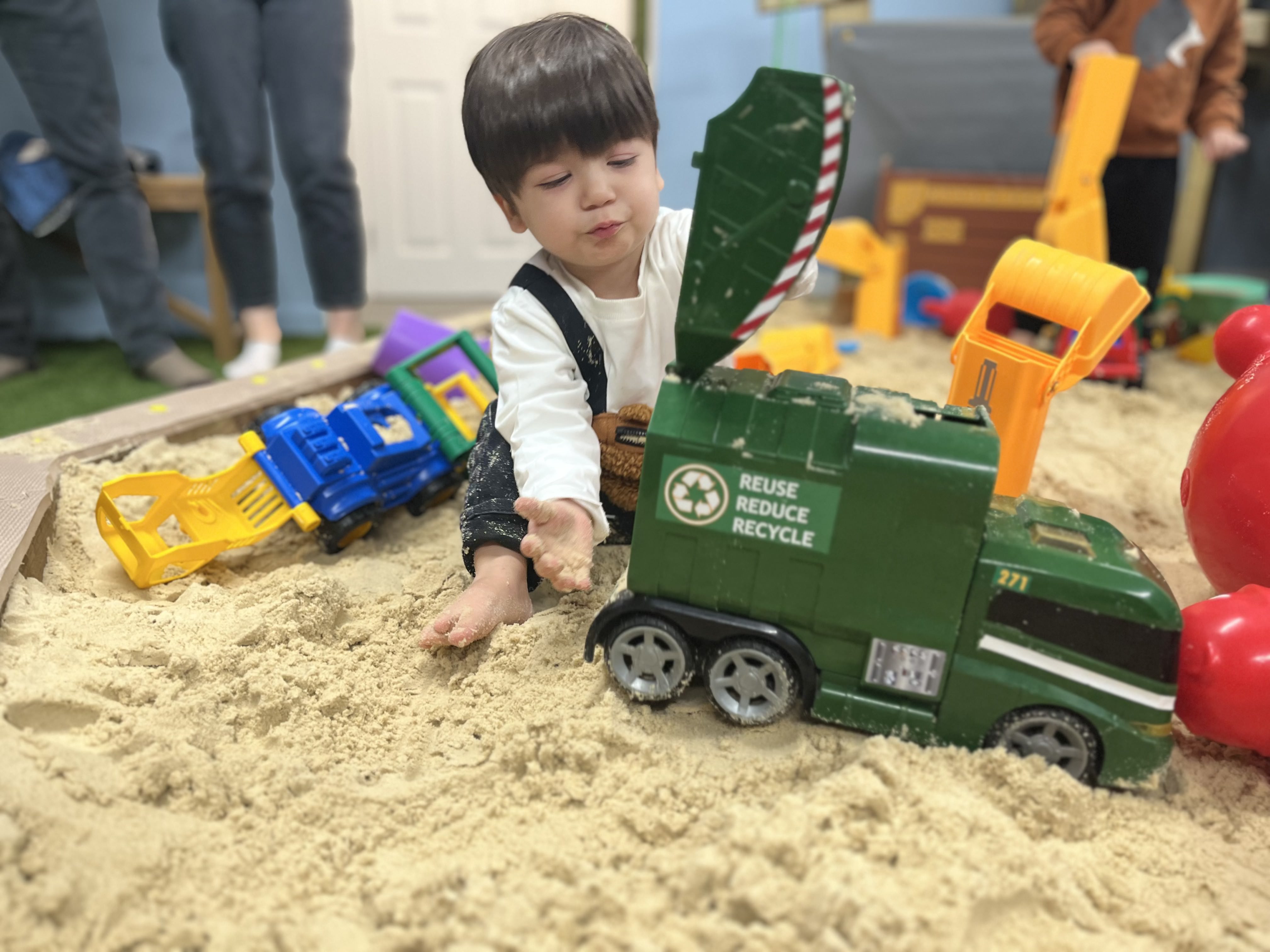
Sand play is a very powerful activity that has many benefits for babies and children. It is a natural play item, providing a blank canvas for many hours of fun and exploration. Some of the benefits of sand play include:
Tactile development (touch sense): Play with sand allows a child to develop their sense of touch by feeling the texture of the sand on their hands and feet, and it provides rich sensory feedback as they explore different consistencies, weights, amounts and shapes that the sand makes.
Cognitive development (thinking & learning): Sand is an ‘open-ended’ play item, which means that there is no set rule to how it must be used or interacted with. This allows a baby or child to decide how they want to play and engage with the sand during play, providing a great opportunity for learning & development. Sand can be used creatively to support a child’s problem-solving skills, imagination, exploration and creativity. You can hide objects in the sand for children to find, you can create different shapes, build creations, and encourage children to guess what they are feeling beneath the sand without looking at the object. Play with sand even supports early maths concepts as children learn about volumes and quantities.
Fine motor skills (hand and finger grasp & movement): Babies and children practice using different hand skills when they play with sand as they may dig, build, hold, carry, mould, and so much more. This helps to develop their strength and coordination of their hand skills which they need for more complex developmental skills such as writing, cutting, fastening buttons, tying laces, etc.
Gross motor skills (big movements): Play in sand helps support strength and balance as children move through an uneven surface which may give way slightly as they move. They will also develop strength by picking up, moving and carrying sand. Digging and building further develops strength, and children often adopt different physical positions during play such as four-point kneeling, squatting, and weightbearing through their shoulders.
Emotional regulation: Playing with sand can be very calming and can help to regulate a child emotionally. Watching and feeling sand fall through your fingers or drawing different patterns in the sand are just two examples of calming sand play.
Social interaction and communication skills: If children are offered opportunities for sand play in shared spaces, it can be a fun way for them to interact with other children. By having a shared activity, children are encouraged to interact with others which supports the development of key social and communication skills.
Benefits of Regular Visits to Indoor Play Areas
Regular visits to indoor play areas offer a multitude of benefits for children and families alike. These vibrant and engaging spaces provide a safe environment for kids to explore, play, and interact with others while staying protected from the unpredictable weather outdoors. Here are some of the key advantages of frequenting indoor play areas:
1. **Physical Development:** Indoor play areas typically feature a range of activities that promote physical exercise and movement. From climbing structures to ball pits, children have the opportunity to enhance their gross motor skills, coordination, and balance through active play.
2. **Social Skills:** Interacting with other children in a shared play space helps young ones develop crucial social skills such as communication, cooperation, and conflict resolution. These experiences lay the foundation for forming friendships and navigating social situations in the future.
3. **Cognitive Development:** Many indoor play areas incorporate puzzles, games, and creative activities that stimulate children's cognitive abilities. By engaging in imaginative play and problem-solving tasks, kids can boost their creativity, critical thinking, and decision-making skills.
4. **Emotional Well-being:** Play is essential for a child's emotional development, allowing them to express themselves, manage their feelings, and build self-confidence. Indoor play areas provide a supportive environment where children can explore their emotions and build resilience through play.
5. **Family Bonding:** Visiting indoor play areas as a family can create lasting memories and strengthen bonds between parents and children. Taking part in activities together fosters a sense of togetherness and creates opportunities for quality time spent as a family.
In conclusion, regular visits to indoor play areas offer a holistic approach to child development, encompassing physical, social, cognitive, and emotional well-being. By incorporating these enriching experiences into your family's routine, you can help your children thrive in a fun and nurturing environment
Conclusion
In conclusion, indoor play areas offer a world of fun and creativity for children and families alike. From the importance of these spaces in nurturing children's development to the key features to consider when choosing a play area, this guide has highlighted the significance of indoor play areas beyond just entertainment. Whether you're exploring options for creating a play space at home or seeking safety tips for worry-free playtime, indoor play areas provide valuable learning experiences and endless joy for little ones. Regular visits to indoor play areas not only spark imagination but also offer numerous benefits for children's holistic growth. So, whether you're new to indoor play areas or a seasoned enthusiast, embrace the wonders of indoor play and unlock a world of fun right within reach